
Low-Impact Exercise Can Still Build Strength: Adapting Your Routine When Your Health Changes
When your health changes, your exercise routine may need to change with it.
That can be frustrating, especially if you’re used to moving a certain way or worry that gentler exercise won’t be enough to help you stay strong.
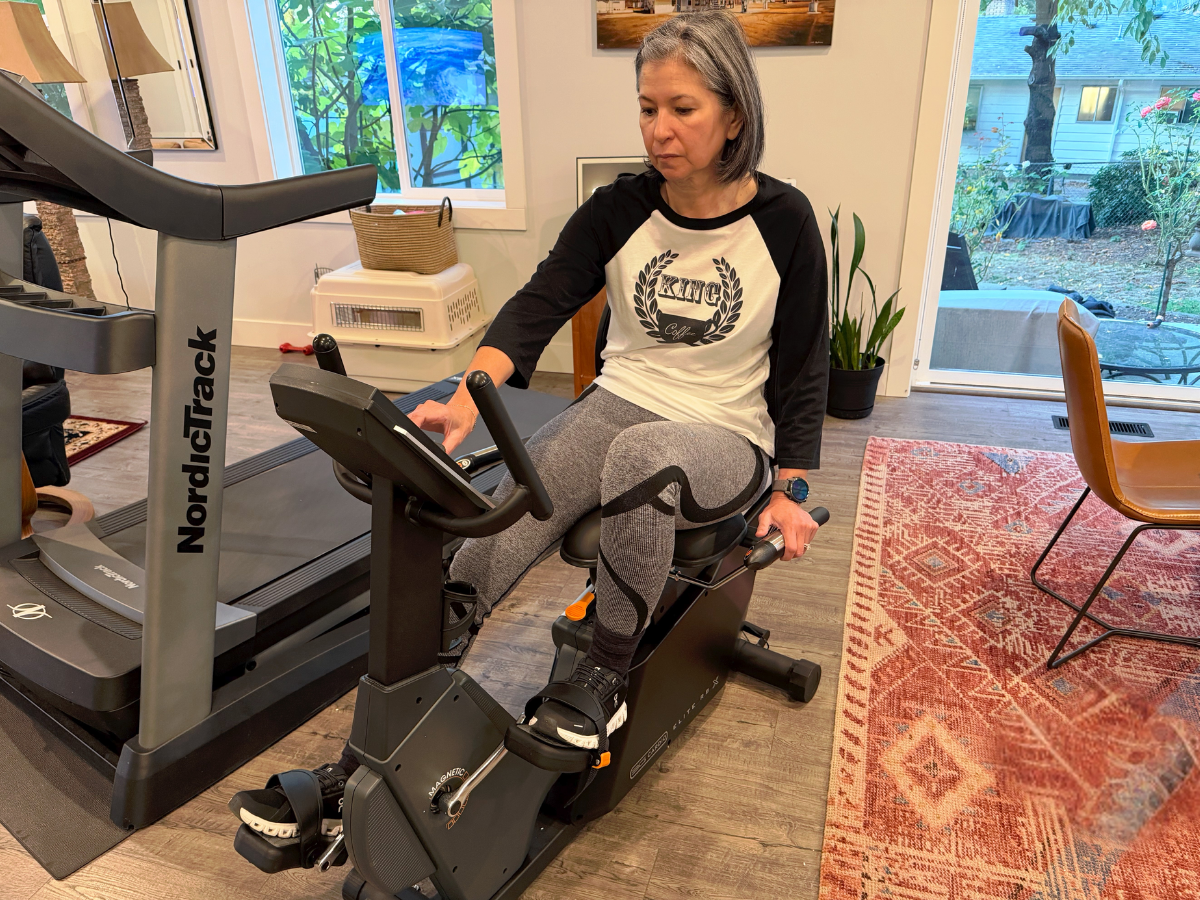
Our nurse practitioner, Debra Johnson, has been navigating this herself. A recent health change has prevented her from doing high-impact exercise, so she has adjusted her routine. She’s been doing lower-impact strength exercises on the floor and invested in a recumbent bike.
Since making these changes, she has noticed improvements in her energy and heart rate variability, or HRV.
Her experience is a reminder that there are different ways to stay active. A routine can look different from what you’re used to and still be worthwhile.
Low impact doesn’t mean low value
“Low impact” generally describes movement with less pounding or jarring, such as cycling instead of jumping or running. It doesn’t automatically describe how challenging an exercise is for your muscles.
Heavy weights and high impact are also separate things. You can lift a heavy weight without jumping, and you can challenge your muscles without heavy equipment.
Bodyweight exercises, resistance bands, and lighter weights can all be part of strength training. The key is giving your muscles an appropriate challenge for your current ability—not simply moving through an exercise that has become effortless.
That challenge should fit any restrictions from your healthcare team. If you’re taking a GLP-1, our guide to muscle loss during weight loss explains why strength deserves attention alongside the number on the scale.
You don’t need to start with heavy weights
If heavy lifting feels intimidating or isn’t appropriate right now, there are other ways to work on strength.
Depending on your health and mobility, options might include:
Standing up from a sturdy chair and sitting back down with control.
Wall push-ups.
Seated resistance-band exercises.
Floor exercises, such as bridges or side-lying leg raises, when appropriate.
These are examples, rather than a prescribed routine. Floor exercises aren’t automatically safe for every health condition, and getting down to the floor may itself be difficult.
A physical therapist or qualified exercise professional can help you choose movements that fit your needs. As you adapt, progress might involve another repetition, a slightly stronger band, or a more challenging variation. It doesn’t have to mean a large jump in weight.
Where a recumbent bike fits in
A recumbent bike allows you to pedal while seated with back support. For Debra, it has become another way to include movement in her changed routine.
Cycling primarily provides aerobic activity: movement that works your heart and lungs. Strength exercises provide a different kind of challenge for your muscles. A bike can complement strength work, although it doesn’t replace strengthening all the major muscle groups.
For a broader look at combining aerobic activity and strength work, read How Much Exercise Do You Really Need While Taking a GLP-1?
You also don’t have to buy equipment to begin. The useful question is: what movement is accessible, comfortable, and appropriate for you now?
Notice how you feel, not just what your tracker says
Debra has noticed better energy and an improvement in her HRV during this period. Those are encouraging personal observations, but they don’t tell us that the new routine alone caused the changes.
HRV measures variation in the time between heartbeats. It can be affected by sleep, stress, illness, medications, and other factors, and wearable measurements have limitations. It’s best considered in the context of your own trends rather than compared with someone else’s number.
You don’t need to track HRV to recognize progress. You might notice that everyday tasks feel easier, that you can do more repetitions with good control, or that you’re able to move more consistently.
Build a routine around your current health
A new diagnosis, injury, or change in symptoms may mean you need guidance before starting or changing exercise. Ask your treating clinician what activities and levels of effort are appropriate, and whether physical therapy would help.
Once you know your boundaries, begin with something manageable. That might be a short session of approved strength exercises or a few comfortable minutes of cycling.
Some days may allow more activity than others. Adjusting to those changes is part of caring for yourself.
Your plan can change with you
At TeleHealthNP, we understand that health and weight management happen alongside real life. Your energy, mobility, and circumstances can change, and your care should take those changes into account.
Our monthly progress notes and follow-up care give you a place to share updates. For a more in-depth conversation, you’re always welcome to schedule a follow-up. Unlimited follow-ups are included at no additional cost.
If your old routine no longer fits, you don’t have to measure every new workout against it. You can work toward strength and better health with movement that meets you where you are.
Learn more about our weight loss program and the personalized support available through TeleHealthNP.
Sources